
The Best Period Products for Swimming
The period products that actually work underwater, which one suits your flow, how to use each one without stress, and how to stay comfortable and leak-free from the changing room to the deep end, from Periodwise.
Yes, you can swim on your period, and no, you do not need to sit it out on the side of the pool. Here are the products that actually work underwater, which one suits your flow, how to use each one without stress, and how to stay comfortable and leak-free the whole time.
Quick answer: The swim-safe options are tampons, menstrual cups, menstrual discs, and dedicated period swimwear. Pads and everyday period underwear do not work in the water, because they soak up pool or sea water and have nothing left to absorb yours. Pick an internal product to match your flow, and use period swimwear on lighter days or as a backup layer for total peace of mind.
Can you swim on your period?
You can, and plenty of people do every single day. Water does not stop your period, but being submerged changes things in a way that catches people out. The pressure of the water around you can slow the visible flow while you are actually in the pool, which is why it can feel like nothing is happening at all. The moment you stand up, climb out, cough, laugh, jump, or sneeze, that pause disappears. So the goal is never to hope the water holds everything in place. The goal is to wear something that collects or absorbs your flow properly, both in and out of the pool, so you are covered the whole time and not just while you are floating.
The good news is that swimming is one of the better things you can do on a period day. Gentle movement, the feeling of being weightless, and the warm water of a heated pool can all ease cramps and lift a low, heavy mood. If you tend to feel sluggish or achy when you are bleeding, an easy swim often leaves you feeling better than you did going in, so there is a real case for getting in the water rather than sitting it out.
If your flow is genuinely very heavy, or cramps are severe enough to make swimming feel unsafe, it is completely fine to skip a session and rest instead. Listening to your body is not the same as being held back by your period, and the two are worth telling apart.
Why pads and period pants stay on dry land
This is the one rule worth memorising. Absorbent products that sit outside your body cannot tell the difference between your flow and the pool. A pad will soak up water until it is swollen, heavy, and completely full before you have swum a single length, and everyday period underwear does exactly the same thing. Neither one has any absorbency left for you by the time you are actually in the water, and a saturated pad can shift, bunch, or peek out of the leg of your swimsuit, which is nobody’s idea of a relaxing swim.
There is one exception, and it is period swimwear, which is engineered specifically to work while wet. Standard pads and ordinary period underwear, though, belong in your bag for afterwards, not in the pool. Keep a fresh one ready for the moment you get changed, and leave them out of the water entirely.
The four products that work in the water
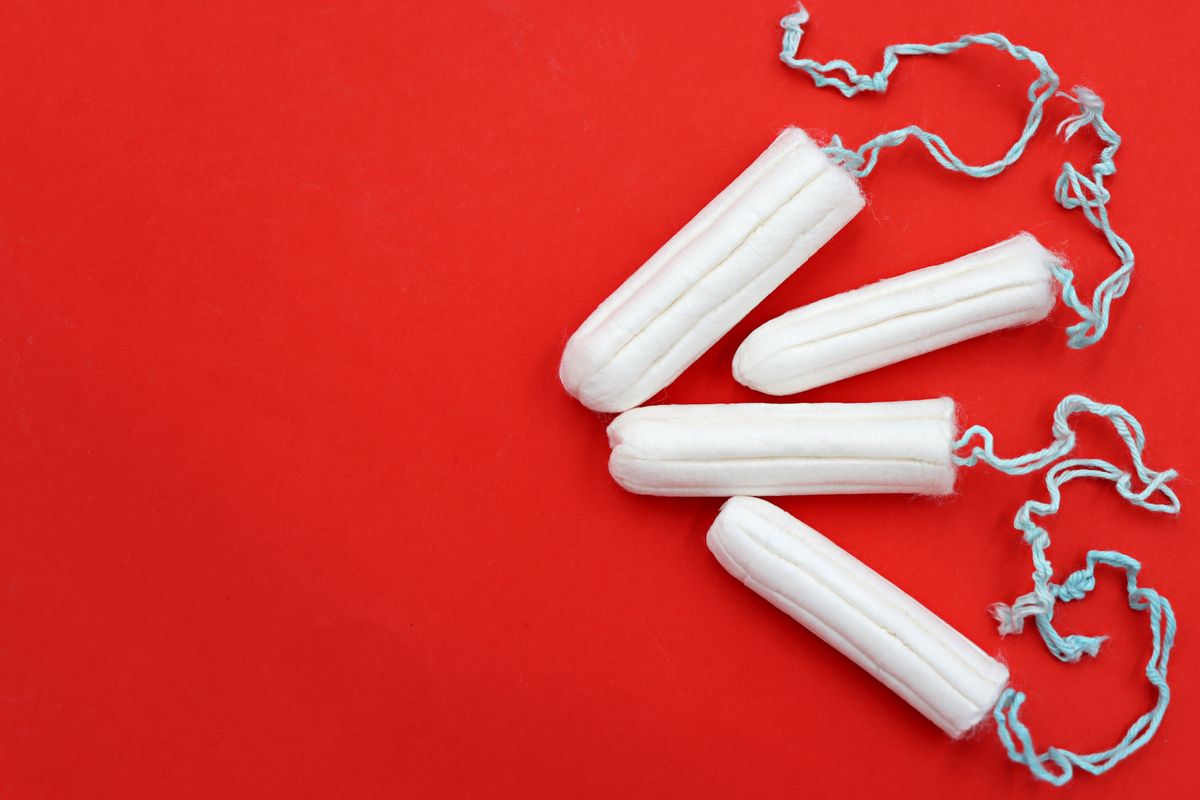
Tampons
Tampons are the classic swim choice for good reason. They sit internally, they are discreet, they are easy to find in any shop, and a fresh one gives you a solid stretch of time in the water. The string is the only thing to think about, and it tucks neatly to one side inside your swimsuit bottoms so it stays hidden and out of the way.
The habit that makes the difference is timing. Put a fresh tampon in right before you get changed, not an hour beforehand, so it is starting at full capacity when you get in. Swap it for a new one as soon as you are done swimming, because a tampon that has already been in for a while and then sat in the water has less left to give, and you do not want to discover that mid-length. Match the absorbency to your flow rather than defaulting to the largest one you can find, since an oversized tampon on a light day is uncomfortable to remove and offers no real benefit. And never leave any tampon in for longer than eight hours, in or out of the pool.
If you are new to tampons, give yourself a practice run at home on a normal period day before you rely on one for swimming. Relax, take your time, and read the instructions in the box. It feels far more manageable when you are not also rushing to make it to a lesson. Sport tampons suit swimming particularly well, because their interlocking fibres expand in every direction, which helps them stay secure and hold together when wet.
Menstrual cups
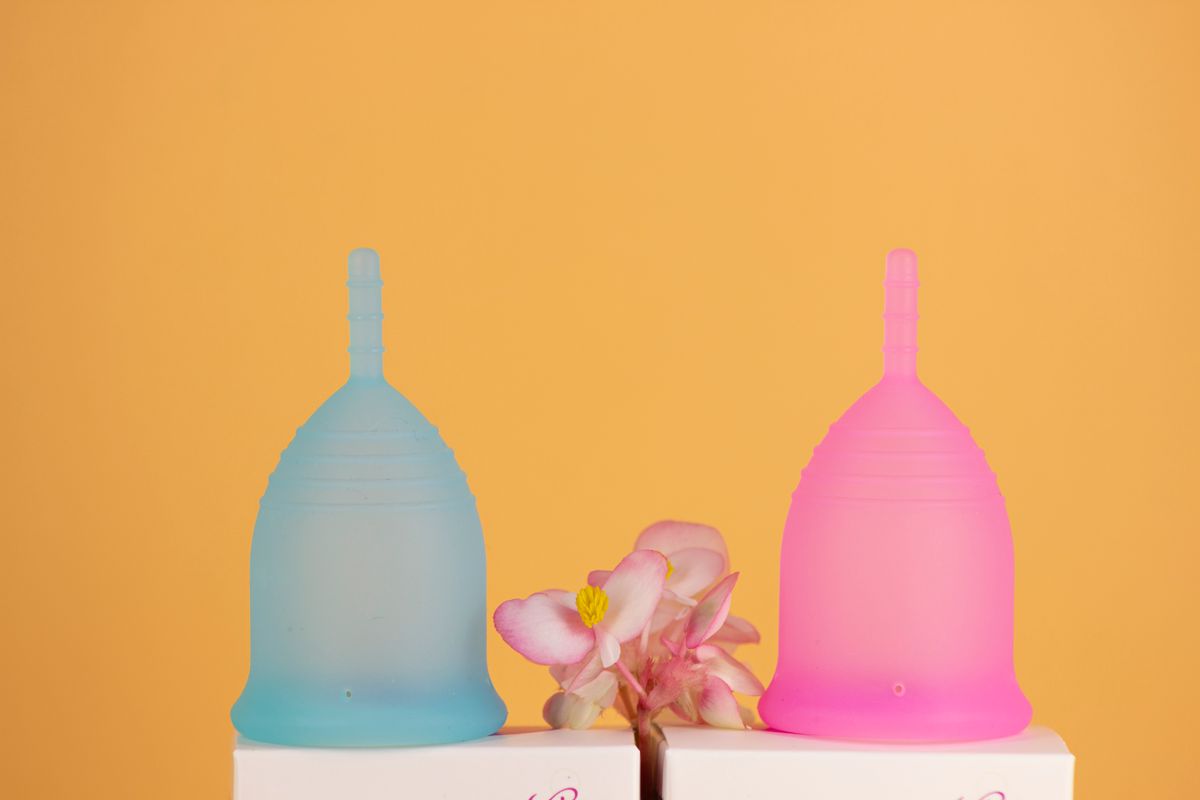
A menstrual cup is a brilliant swim companion, especially if you would rather not deal with a string or dash to the changing room mid-session. It sits internally and collects your flow rather than absorbing it, so pool and sea water are simply not a factor, and a well-placed cup forms a light seal that holds firm while you kick, dive, and turn. Capacity is the big win: a cup holds noticeably more than a tampon and can stay in for up to twelve hours, so it comfortably covers a long swim, a full day at the beach, or a lesson followed by free swim, all without a single change.
There is a learning curve to getting the fold and the placement right, and that is completely normal. Give yourself a period or two of practice at home before your first pool day, so that by the time you are in the changing room it already feels routine. Cups are also reusable for years, which makes them kinder on both your budget and the planet over time, a nice bonus if sustainability matters to you.
Menstrual discs
A menstrual disc is the understated overachiever of swimming products. Like a cup, it collects rather than absorbs, but it sits higher up and tucks behind the pubic bone instead of forming a suction seal, which a lot of people find more comfortable and even easier to forget is there. Discs tend to have the highest capacity of any option on this list, so they suit heavier days and longer stretches in the water particularly well, and they are a genuinely good shout if you have tried a cup before and found the fit or the seal fiddly.
The insertion angle is different from a cup, aiming back and down rather than straight up, so a practice run at home first is well worth it. Discs come in both reusable and single-use versions, so you can choose based on whether you would rather rinse and reuse or keep things simple with a fresh one each time.
Period swimwear
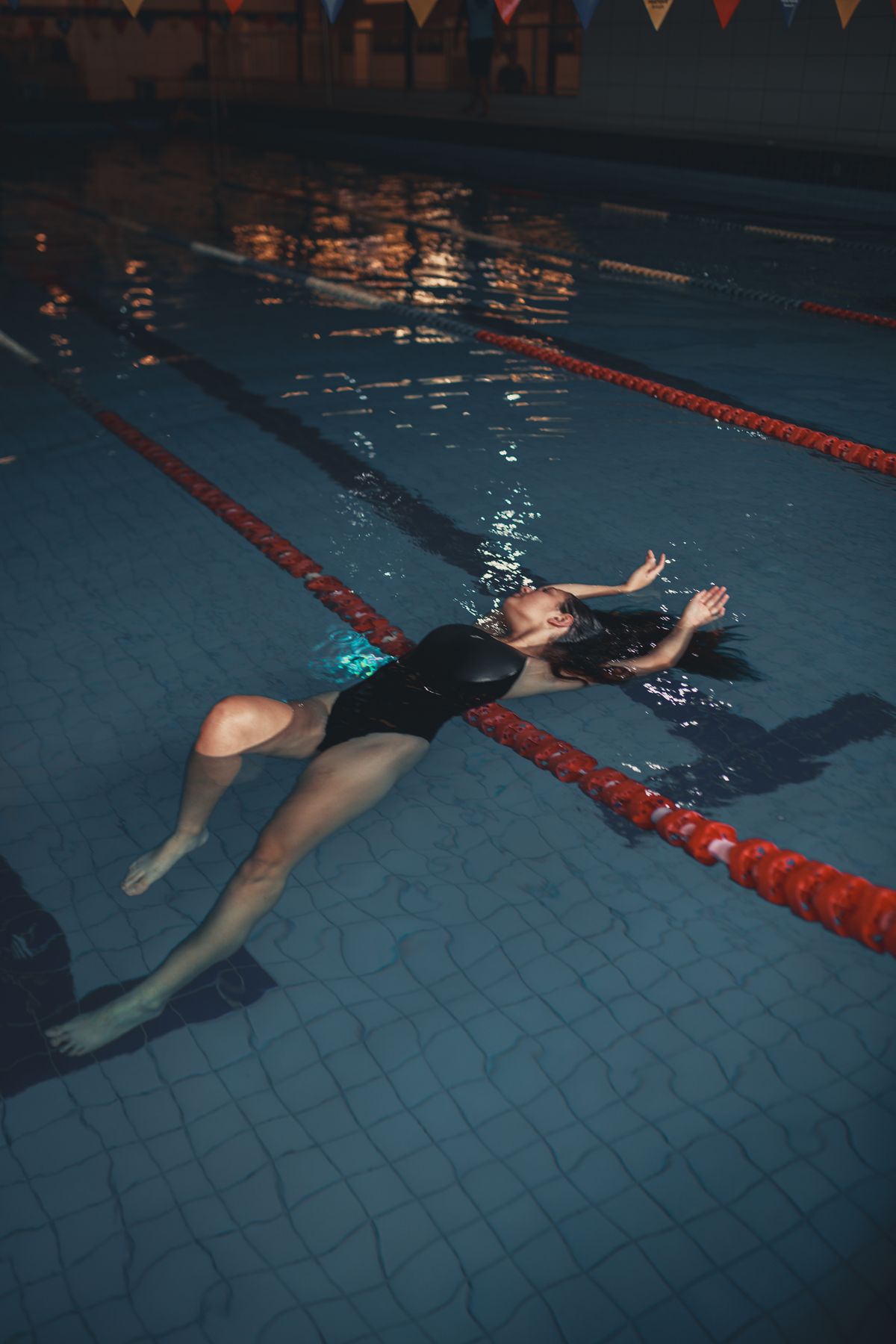
Period swimwear is the newest option and the one that genuinely surprises people. These are swimsuit bottoms, one-pieces, or bikini briefs with a discreet absorbent, leak-resistant lining built right in, designed to work while wet in a way ordinary period underwear never could. On a light day or the tail end of your period, a single pair can be enough on its own. On a medium or heavy day, they come into their own as a backup layer worn over a tampon, cup, or disc, catching anything that escapes so you can relax completely and stop second-guessing.
They are the friendliest choice for anyone not ready to use an internal product, including younger swimmers taking their first period in their stride, and because they look and feel like ordinary swimwear, they double as your normal suit the rest of the month. They are reusable too, so they earn their place in your kit over a whole season rather than a single day.
Which one is right for you
If you want | Best pick | Why |
|---|---|---|
The simplest, most familiar option | Tampon | Easy to use, widely available, discreet |
Long sessions and fewer changes | Menstrual cup or disc | High capacity, up to eight to twelve hours |
The most comfortable internal fit | Menstrual disc | Sits higher, with no suction seal to feel |
No internal product at all | Period swimwear | Works alone on light days, reusable and sustainable |
Total peace of mind on a heavy day | Internal product plus period swimwear | Collection inside, backup layer outside |
A budget and planet-friendly long game | Cup, disc, or period swimwear | Reusable for years rather than single-use |
There is no single right answer here, and plenty of people mix and match depending on their flow and the day. If you take just one idea away, let it be this: layering an internal product with period swimwear is the closest thing to a foolproof setup for a heavy day or an important swim, because if one thing ever falls short, the other has you covered. If you are not sure where to start, this is exactly the kind of thing Sarah, the Periodwise assistant, can help you think through.
Swimming lessons, school, and swimming with friends
Swimming when other people are around, whether that is a school lesson, a swim class, or a day at the pool with friends, is where the nerves usually live, and it is worth saying plainly that nobody can tell you are on your period from the outside. An internal product is completely invisible in a swimsuit, and period swimwear looks like any other suit. There is no smell in the water, nothing shows, and the people around you are far more focused on themselves than on you.
If you have a swimming lesson you cannot easily move and you are not yet comfortable with tampons, cups, or discs, period swimwear is your bridge. It lets you take part without using an internal product, so you are not forced to choose between missing out and doing something you are not ready for. And if you would genuinely rather sit a lesson out, most schools and clubs will accept that without a fuss, so you always have that option in your pocket too.
Building your swim-day kit
A little bit of preparation removes almost all the stress. A good swim-day kit lives in your bag so you are never caught out:
- A fresh internal product to insert right before you swim
- A spare of the same, in case you need to change unexpectedly
- A pad or fresh period underwear for straight after your swim
- A small plastic or reusable wet bag for anything used
- A dark towel and a spare pair of underwear
- Painkillers if cramps tend to hit, plus a snack and water
Keep a version of this kit packed during the days you expect your period, and topping it up becomes a five-second job rather than a scramble.
Staying leak-free from changing room to deep end
A handful of small habits cover almost everything.
- Change right before you swim. Insert a fresh tampon, cup, or disc just before you get into your suit, so it is at full capacity the moment you hit the water rather than halfway through its life.
- Tuck the string. If you are using a tampon, tuck the string to one side inside your bottoms so it stays hidden and dry throughout.
- Reach for darker swimwear. A darker or patterned suit gives you a little extra confidence, even though a well-placed internal product should not leak in the first place.
- Do a quick check when you get out. Standing up releases that water-pressure pause, so a fresh product and a quick trip to the changing room right after swimming keeps everything easy and comfortable.
- Change out of a wet suit fairly promptly. Sitting around afterwards in a damp swimsuit is where leaks and general discomfort tend to sneak in, so getting into dry clothes and a fresh product is the last piece of the puzzle.
Myths worth letting go of
"Your period stops in water." It does not. The water pressure only pauses the visible flow while you are fully submerged, and it returns the instant you stand up. This is exactly why wearing a proper product matters, rather than trusting the water to do the job.
"Everyone will be able to tell." They will not. Internal products are invisible in a swimsuit, period swimwear looks like ordinary swimwear, and there is nothing to see or smell in the water.
"Sharks will find you." There is no good evidence that swimming on your period raises your risk from sharks. Marine researchers do not treat menstruation as a meaningful factor, and with an internal product your flow is contained inside your body anyway. Swim in the sea on your period the same as any other day.
"Chlorine or salt water will mess up your cycle." Neither one harms you or changes your period. They only affect how much flow is visible while you are actually submerged, and that goes back to normal the moment you get out.
Frequently asked questions
These are the questions Periodwise readers ask most about swimming on their period.
Can you swim on your period without a tampon?
Yes. A menstrual cup or disc works internally without a string, and period swimwear works with no internal product at all, which makes it a good choice on a light day or for anyone not using tampons yet.
Will I leak in the pool?
Not if you are using an internal product that suits your flow and you have inserted it fresh right before swimming. The water pressure also reduces visible flow while you are submerged. Layering period swimwear over a tampon, cup, or disc gives you a reliable backup for complete peace of mind.
Is period swimwear enough on its own?
On a light day or the last day or two of your period, often yes. On a medium or heavy day, wear it as a backup over a tampon, cup, or disc rather than relying on it alone.
How long can I stay in the water?
That depends on your product and your flow. Tampons should be changed within eight hours, while cups and discs can usually stay in for up to twelve. Whatever you are using, put a fresh one in right before you swim so you are starting with full capacity.
Do I need to change my product straight after swimming?
Yes. Standing up releases the water-pressure pause, so change into a fresh product when you get out, and swap a wet swimsuit for dry clothes fairly soon after.
Does chlorine or salt water affect your period?
No. Neither one harms you or changes your cycle. They only affect how much flow is visible while you are actually submerged, which returns to normal as soon as you get out.
I have never used a tampon or cup. What should I try first for swimming?
Period swimwear is the gentlest starting point, since it needs no internal product at all. When you feel ready to try a tampon, cup, or disc, practise at home on a normal period day first so it feels routine before you rely on it in the pool.
Know someone who should read this?
Most of us learn this from a friend, not a doctor.