
Period Acne: A Simple Routine for the Week Before
Premenstrual acne flares in the week before your period. Here is why it happens and a simple skincare routine to get ahead of it, from Periodwise.

Why your skin breaks out in the days before your period, and a small, repeatable routine to get ahead of it.
Quick answer: Period acne, also called premenstrual or hormonal acne, is the breakout that shows up in the week before your period, usually along the jaw, chin, and lower cheeks. It happens because hormone shifts in the second half of your cycle raise oil production. Because it follows your cycle, it is predictable, and the Periodwise approach is to start a few targeted products a few days early rather than react once the spots arrive. The routine below covers what to use and in what order.
What is period acne?
Period acne is acne that flares in a predictable pattern around your menstrual cycle, most often in the days just before bleeding starts. You will also see it called premenstrual acne, menstrual acne, or hormonal acne, and the terms overlap. It tends to be inflammatory, meaning red and slightly raised rather than only blackheads, and it favours the lower third of the face.
It is common. In one frequently cited study of 400 women, about 44 percent reported their acne worsening in the days before their period (Stoll and colleagues, 2001). A separate analysis found that roughly 63 percent of adult women had more acne lesions in the late luteal phase, the stretch just before menstruation. Earlier research put the figure as high as 60 to 70 percent. So if your skin shifts on a monthly schedule, you are in a large majority, not an unlucky minority.
This is the kind of pattern Periodwise is built to help you read. Once you connect the breakout to a phase of your cycle, it stops being random and starts being something you can plan around.
Why does your skin break out before your period?
Your skin breaks out before your period because of the hormone shift in the second half of your cycle. Through that stretch your levels move steadily. Oestrogen falls after ovulation while progesterone rises, and in the last few days before your period the balance tips toward your androgens. Androgens tell your skin to make more oil, called sebum, which gives clogged pores and acne-causing bacteria more to work with.
That is why the breakout clusters on the lower face, where oil glands sit closer together, and why it often calms down once your period starts and hormones settle. It is also why the same spot tends to recur month after month. The trigger is internal and cyclical, so the response on your skin is too.
The luteal phase is the window to watch. The days between ovulation and your period are when oil production climbs, and they are the days the routine below is designed for.
When does period acne start and stop?
Period acne usually starts in the seven to ten days before your period and eases once bleeding begins. The exact window varies from person to person, but the pattern is consistent enough to plan around. Most people find the flare builds through the late luteal phase, peaks just before or at the start of menstruation, then fades over the following days as hormones rebalance.
This is the single most useful thing to know, because it means you are not stuck reacting. If you know your period is due in a week, you know the flare is coming, and you can have the right products already working on your skin before the first spot appears.
The week-before routine
The goal here is consistency. A few well-chosen products used reliably in the days before your period will do more than a cabinet of actives you rotate at random.
Start a few days early
If you track your cycle, begin being consistent about five to seven days before your period is due. You are not adding anything dramatic. You are making sure the basics happen every morning and night, so your skin is in good shape going into the flare instead of catching up during it. Starting early gives each product time to work, since most acne actives take days, not hours, to show a difference.
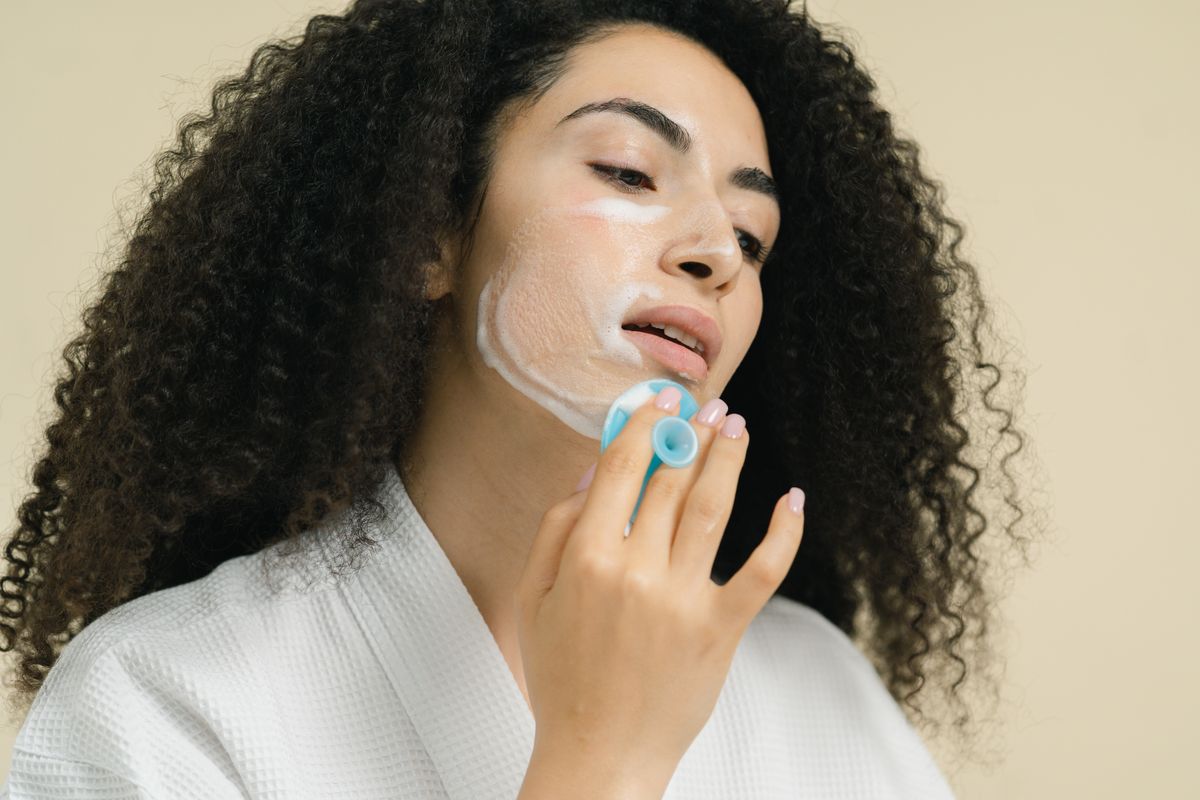
A gentle cleanser, morning and night
Wash with a mild cleanser that does not leave your skin tight or squeaky. Stripping your skin makes it produce more oil, not less, which is the opposite of what you want this week. A gel or cream cleanser for normal-to-oily skin is plenty, and the harsh scrubs do more harm than good. Use lukewarm water, give it a full minute, and pat dry rather than rubbing.
One active ingredient, chosen for your breakout
Pick one active ingredient and stay with it instead of layering several. Two do most of the work for premenstrual acne.
Salicylic acid is a BHA, which means it is oil-soluble and can clear out the inside of a clogged pore. It suits blackheads, whiteheads, and the under-the-skin congestion that does not come to a head. Benzoyl peroxide works on the bacteria behind red, inflamed pimples, so it suits the angry spots that surface overnight. If you are not sure which you have, salicylic acid is the gentler place to begin, and Sarah, the Periodwise assistant, can talk through which fits your skin if you want a second opinion.
A lower-strength benzoyl peroxide, around 2.5 percent, is worth knowing about, because it works about as well as the stronger versions with much less irritation. One practical warning: benzoyl peroxide bleaches fabric, so keep it to white towels and pillowcases.

Salicylic acid vs benzoyl peroxide
If you want the difference at a glance, here is how the two most useful actives compare for period acne.
Salicylic acid (BHA) | Benzoyl peroxide | |
|---|---|---|
Best for | Blackheads, whiteheads, clogged pores, under-the-skin bumps | Red, inflamed, pus-filled pimples |
How it works | Oil-soluble, clears the inside of the pore | Reduces acne-causing bacteria and inflammation |
Gentle starting strength | 0.5 to 2 percent | Around 2.5 percent |
Caution | Can dry skin if overused | Bleaches fabric, can dry skin |
Good first choice if | You mostly get congestion and texture | You mostly get red, painful spots |
You do not need both. Choosing the one that matches your breakout type is more effective than running two and irritating your skin.
Niacinamide to take the heat out
If your skin runs oily and red in this stretch, a niacinamide serum is a low-risk addition. It helps regulate oil and calms inflamed skin, and it layers fine over either active above. Niacinamide is one of the few extras that plays well with almost everything, which makes it a safe step to add even if the rest of your routine is minimal.

Moisturiser, even now
Oily, breakout-prone skin still needs moisture, and skipping it backfires. When skin gets dry it compensates by making more oil. Use a light, oil-free moisturiser labelled non-comedogenic, which means it is formulated not to clog pores. Apply morning and night, once your active has absorbed. If an active is drying you out this week, a little more moisturiser is usually the fix, not less.

Sunscreen in the morning
Salicylic acid and benzoyl peroxide both leave your skin more sensitive to the sun, and sun exposure darkens the marks that breakouts leave behind. A non-comedogenic SPF 30 or higher every morning covers both. Non-comedogenic just means it is formulated not to clog pores, which matters when your skin is already breaking out. This is the step people skip and then regret when a healed spot leaves a brown mark for months. Those marks, called post-inflammatory hyperpigmentation, fade much faster when they are protected from the sun while they heal.

Pimple patches for the ones that surface
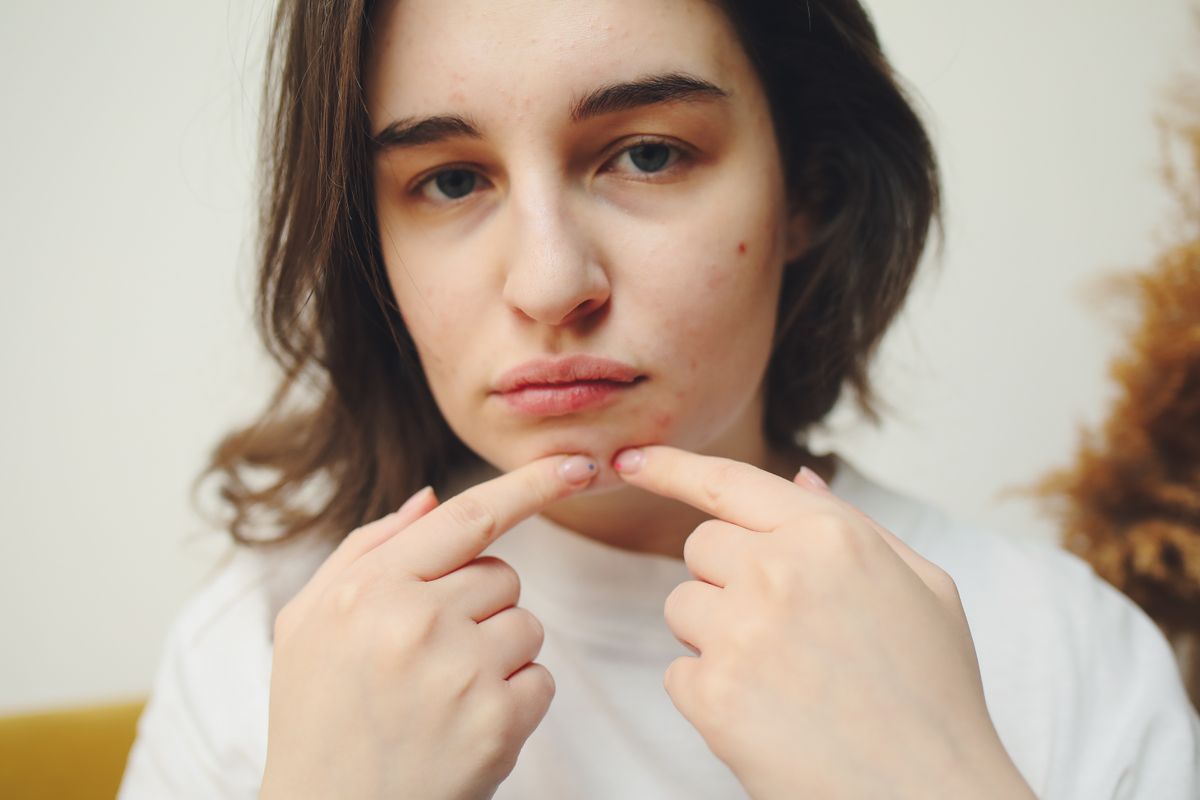
When a spot does come up, a hydrocolloid pimple patch is the kindest way to handle it. It draws out fluid and flattens the spot faster than leaving it alone, and it physically stops you picking at it. Keep a sheet in your bag for the days a spot lands somewhere you cannot ignore. Patches work best on a spot that has come to a head, less so on a deep bump that is still under the surface.
Does diet or lifestyle affect period acne?
Diet and lifestyle can play a part, though they are rarely the whole story. Some research links high-glycaemic foods, the kind that spike blood sugar quickly, to more breakouts, and dairy has been associated with acne in several studies, though the evidence is mixed and individual. Stress matters too, because cortisol can nudge up oil production, which is part of why a stressful month can feel like it shows on your skin.
The Periodwise view is to change one thing at a time and watch what happens over a couple of cycles, rather than overhauling your diet on the strength of a single article. Sleep, hydration, and managing stress are low-risk places to start. If you are considering bigger dietary changes, that is a conversation worth having with a doctor or dietitian rather than a solo experiment, especially while you are still growing.
A few things to skip
Resist piling on new actives the week your skin is already reactive. One change at a time, given a few weeks, actually tells you what helps. Go easy on exfoliation, which only inflames skin that is already irritated. And as hard as it is, leave the spots alone. Picking is the main reason a breakout leaves marks that outlast the spot by months.
It is also worth skipping the urge to scrub harder or wash more often when skin flares. Acne is not a cleanliness problem, and over-washing strips the barrier and makes things worse. Gentle and consistent beats aggressive and occasional every time.
When it is more than a monthly breakout
A simple routine handles the mild, predictable kind of premenstrual acne. Some hormonal acne needs more. If your breakouts are deep and painful, leave scars, spread well beyond your lower face, or do not settle between cycles, it is worth taking to a dermatologist or your doctor. The treatments that genuinely move hormonal acne, including prescription retinoids, certain birth control pills, and medications like spironolactone, are provider decisions rather than things to assemble yourself. Adapalene, a retinoid, is sold over the counter now and helps a lot of people, but retinoids are worth running past a professional first, especially if you are pregnant or might be.
Periodwise is an education resource, not a substitute for a clinician. The aim of a guide like this is to help you arrive at that appointment knowing what your skin does and when, which makes the conversation faster and more useful.
A simple starting point
If you want the shortest version: a gentle cleanser, one active that matches your breakout type, a light non-comedogenic moisturiser, and a sunscreen every morning. Add pimple patches for the days you need them. Start it the week before, keep it boring, and let it run.
Frequently asked questions
These are the questions Periodwise readers ask most about period acne.
Why do I break out before my period?
You break out before your period because of the hormone shift in the second half of your cycle. As oestrogen falls and androgens have more influence, your skin produces more oil, which leads to clogged pores and inflammation. The flare usually settles once your period starts.
How many days before my period does acne start?
Period acne typically starts seven to ten days before your period and eases as bleeding begins. The exact window varies, but it tends to be consistent enough from cycle to cycle that you can predict and prepare for it.
Is period acne the same as hormonal acne?
Period acne is a type of hormonal acne. Hormonal acne is the broader term for breakouts driven by hormone activity, and the premenstrual flare is the version tied specifically to the timing of your menstrual cycle.
Does period acne go away on its own?
A mild premenstrual flare often fades on its own within a few days of your period starting. A consistent routine can shorten it and reduce its severity. If breakouts are persistent, painful, or scarring, they are unlikely to resolve without help, and a provider is the right next step.
Should I use salicylic acid or benzoyl peroxide for period acne?
Use salicylic acid for clogged pores, blackheads, and under-the-skin congestion, and benzoyl peroxide for red, inflamed, pus-filled spots. If your breakouts are a mix or you are unsure, salicylic acid is the gentler one to start with. You do not need both.
Can birth control help period acne?
Certain combined birth control pills are prescribed to help hormonal acne, and they work for many people. This is a provider decision, because the right option depends on your health history and what else you need from contraception. Periodwise has a separate guide to comparing birth control methods if you want the background before that conversation.
Why do I get acne on my chin and jaw before my period?
The chin and jaw have a higher density of oil glands and are especially responsive to the androgen activity that rises before your period. That is why hormonal breakouts concentrate there rather than across the whole face.
Know someone who should read this?
Most of us learn this from a friend, not a doctor.