
Period Fatigue: Why You’re Exhausted and What Actually Helps
Period fatigue is not one thing. Here is how to tell the normal hormonal dip from low iron, your thyroid, blood sugar, or PMDD, so you can find the fix that is actually yours, from Periodwise.

Why you are running on empty, why the answer is not the same for everyone, and how to work out which fix is yours.
Quick answer: Period fatigue is real, and it is not one thing. The hormonal dip around your period is normal and responds to sleep, food, and getting your cramps under control. But exhaustion that never really lifts is usually something else, most often low iron, and sometimes your thyroid, your sleep, your blood sugar, or PMDD. These need completely different fixes, so the useful first step is not a supplement. It is working out which kind you have.
If you drag yourself through the same few days every month, cancel plans you actually wanted to go to, and cannot work out why sleep does nothing, this one is for you.
Start with the shape of it
Before anything else, notice the pattern, because it tells you more than any single symptom does. Fatigue that dips before your period and genuinely lifts once it is over is usually the normal hormonal dip. Fatigue that never really recovers, and is slowly getting worse over months, points towards low iron. Tiredness that tracks your bad nights more than your cycle is often broken sleep from cramps. Afternoon crashes that come in waves tied to meals are more likely blood sugar. Energy and mood collapsing together in the week before your period suggest PMS, or PMDD if it is severe. And tiredness with no cycle pattern at all, alongside feeling cold, weight changes, or hair loss, is worth a thyroid check.
Most people have more than one of these running at once. That is fine, and it is part of why "just take iron" so often disappoints.
The normal hormonal dip
There is a genuine physical reason you feel flatter around your period. Progesterone climbs in the second half of your cycle and then falls away sharply, and that drop alone can leave you heavy and low. Your core body temperature also runs slightly higher in the luteal phase, which makes sleep lighter and more broken even when nothing else is wrong. Add bloating, a mood dip, and the ordinary effort of getting through a school or work day on your period, and tiredness is a reasonable response rather than a personal failing.
This kind should dip and then genuinely lift once your period is over. If it does, it is not a problem to solve so much as a week to plan around.
What helps: cool the bedroom for that week specifically, since you are working against your own thermostat. Hold your wake-up time steady rather than sleeping in to catch up, which usually makes the next night worse. And get outside for twenty minutes, because light movement reliably beats lying still for cycle fatigue, annoying as that is.
Your cramps are stealing your sleep
This one is badly underrated, and almost nobody frames it as an energy problem.
Prostaglandins, the compounds that drive cramping, fragment your sleep even when you never fully wake up. You are not lying awake, so you assume you slept, and then you cannot understand why eight hours did nothing.
Getting the pain under control is not just about comfort. It buys back sleep that is being taken from you without you realising it.
What helps: take an NSAID like ibuprofen or naproxen early, at the first twinge, rather than once you are already miserable. These work by blocking prostaglandin production, so they are far more effective before the process is fully underway than after. Follow the packet dosing, take it with food, and check with a provider or pharmacist first if you have asthma, stomach, or kidney problems. Our Build Your Pain & Relief Plan tool covers the options in more detail.
There is a bonus here. NSAIDs also reduce menstrual blood loss, so if heavy bleeding is draining your iron, this one is doing double duty.
Low iron, the big one
If your tiredness never really lifts, this is where to look first.
Blood carries iron, and a period is by definition losing blood. A typical period sheds a small, easily replaced amount, but a heavy one can lose more than your body rebuilds before the next arrives. Repeat that for months or years and your reserves steadily run down. Since iron is what lets your blood carry oxygen, low iron feels less like ordinary tiredness and more like the stairs got longer and your brain is buffering.
It is far more common than people realise. A study by Weyand and colleagues, published in JAMA in 2023, found that almost 40 percent of US females aged 12 to 21 met the criteria for iron deficiency, while only around 6 percent had progressed to full anaemia.
That gap is the important part.
Low iron and anaemia are not the same thing
Your body stores iron in reserve, measured by a marker called ferritin, and it will drain that reserve to keep your blood counts looking normal for as long as it can. So ferritin falls first, and you feel awful. Only much later does haemoglobin drop and a standard blood count finally flag anaemia.
You can spend years feeling terrible with a blood test that reads as normal. A full blood count does not include ferritin. You have to ask for it by name.
Ask for the number, too, not just the verdict. Many labs only flag a ferritin as low below roughly 12 to 15 nanograms per millilitre, while a good deal of clinical work puts the start of real deficiency closer to 30. A result of 18 can be reported as normal and still explain exactly how you feel.
Signs it might be iron
- Getting winded by things that never used to wind you
- Dizziness on standing, cold hands and feet, looking washed out
- Hair shedding noticeably more than usual, brittle nails
- Restless, crawling legs at night
- Craving or actually chewing ice, or wanting to eat chalk, paper, or dirt
That last one has a name, pica, and it is one of the more specific signals of iron deficiency there is. If you are crunching ice all day, that is not a quirk.
Get the number
Ask your doctor for a ferritin test alongside a full blood count. That is the right route, especially if your periods are heavy, because you want the bleeding looked at as well. If you are in the US and the appointment is the bottleneck, you can order your own.
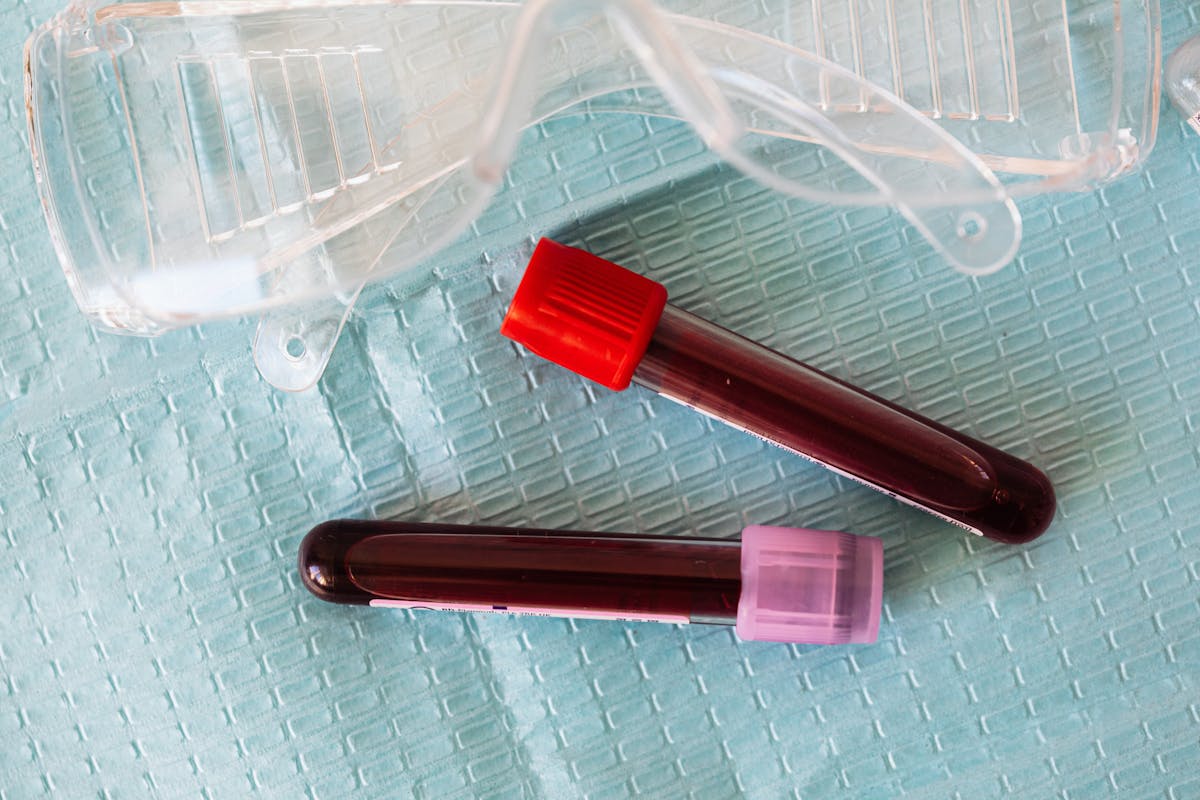
Do not skip to supplementing. Iron is one of the few nutrients where more is genuinely not better. Your body has an efficient way to absorb it and no efficient way to shed it, so taking it when you do not need it commonly causes constipation and stomach pain for no benefit, and it is actively harmful for people with an iron-storage condition. Test, then act.
If it comes back low
Food does a lot of the work. Iron from meat, fish, and poultry absorbs most easily. Iron from lentils, beans, tofu, pumpkin seeds, fortified cereals, and dark greens is still useful, it just needs help: pair it with vitamin C, and keep tea and coffee away from those meals, since both sharply cut absorption when consumed alongside food.
If your provider recommends a supplement, one that pairs iron with vitamin C is easier on the stomach and easier to stay on.
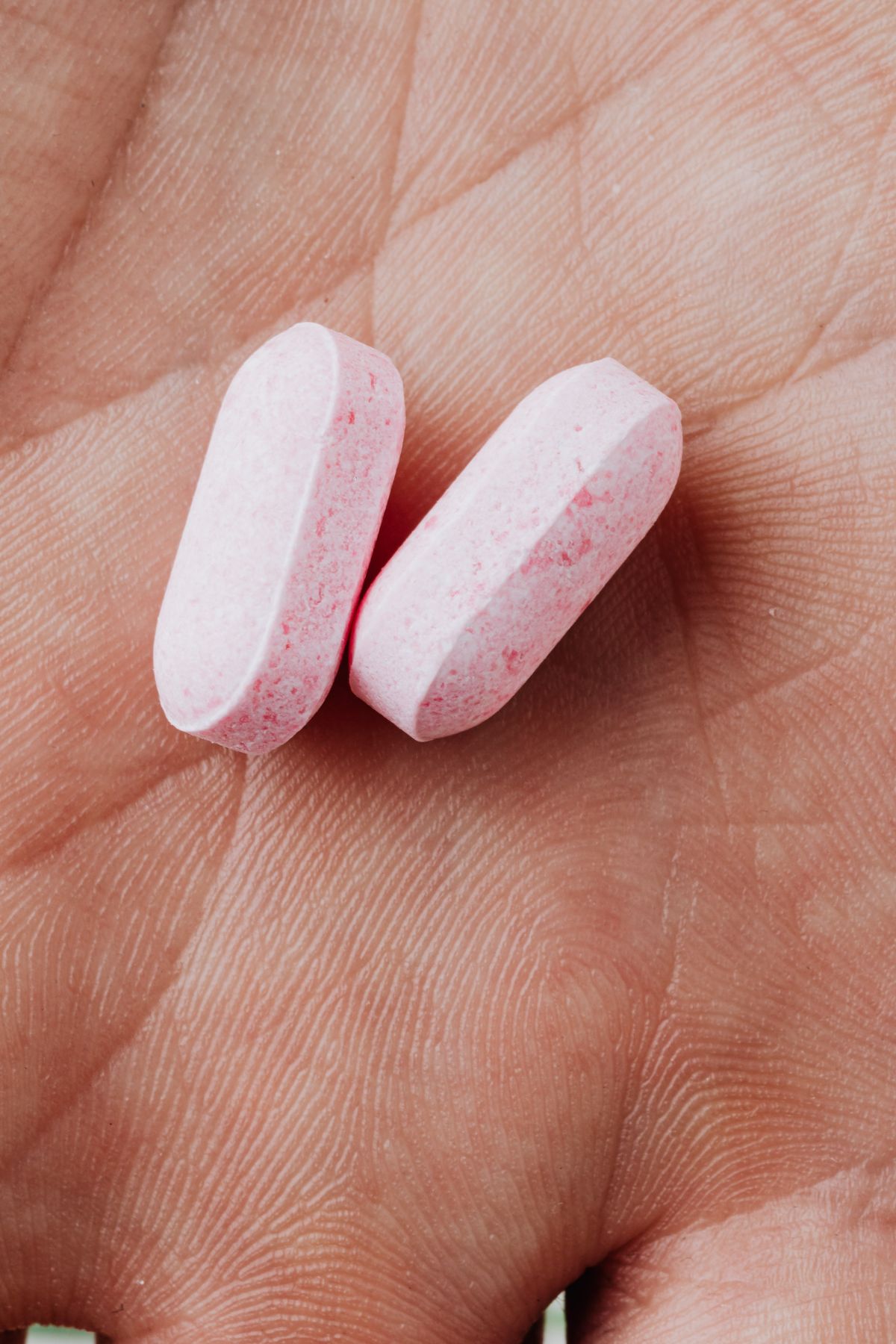
Two things worth knowing. Taking it every other day may beat every day, because iron raises a hormone called hepcidin that blocks absorption for the next day or so, and alternate-day dosing improved the fraction actually absorbed in research by Stoffel and colleagues, Lancet Haematology, 2017. And be patient: energy often lifts within weeks, but refilling your stores takes three to six months. Stopping the moment you feel human again is the commonest reason iron treatment does not stick.
For other supplements and how the evidence stacks up, see the supplements section on our Relief & Options page.
Blood sugar, which looks exactly like period fatigue
Appetite and cravings genuinely shift in the luteal phase, and it is easy to end up running on coffee and whatever is nearest. That produces a spike and then a crash that feels identical to period fatigue and is not.
What helps: eat at regular intervals, and build meals around protein and fibre rather than fast carbohydrate alone. Deeply boring, and it removes a whole layer of exhaustion people wrongly file under their cycle. Keep caffeine sensible, and move it earlier in the day and away from your iron-rich meals, since it works against both your sleep and your absorption.
When the mood goes with the energy
If your energy and your mood collapse together in the week before bleeding and lift once your period starts, that is premenstrual, and in its severe form it is PMDD, premenstrual dysphoric disorder. The exhaustion here is not a side effect of feeling low. It is part of the condition.
PMDD is under-diagnosed and genuinely treatable, so if the week before your period reliably flattens you emotionally as well as physically, that is worth naming to a provider rather than absorbing.
When it is not your cycle at all
Sometimes ferritin comes back genuinely fine and you are still exhausted. That is information, not a dead end.
Persistent fatigue has common causes with nothing to do with your period, including an underactive thyroid, vitamin B12 or vitamin D deficiency, coeliac disease, sleep apnoea, and depression. A thyroid check in particular is a simple blood test and is worth asking for at the same appointment, since the symptoms overlap almost completely with iron deficiency and the two are easily confused.
Normal iron rules out one cause. It does not rule out the problem. Go back and ask what else can be checked.
When to talk to a provider
- Periods heavy enough to soak through a pad or tampon hourly, pass large clots, or last beyond seven days
- Fatigue that is interfering with school, work, or the things you normally do
- Breathlessness, a racing heart, chest discomfort, or feeling faint
- Craving or eating ice or non-food items
- Mood that collapses with your energy every luteal phase
- Iron that has been checked, come back normal, and left you still exhausted
Periodwise is an education resource, not a substitute for a clinician. The aim of a guide like this is to help you arrive at that appointment knowing what your body does and when, which makes the conversation faster and far more useful.
A simple starting point
Work out the shape of your tiredness first. If it dips and recovers, treat the cramps, cool the room, hold your wake time, eat properly, and move. If it never recovers, get your ferritin checked, not just a blood count, and ask for the number. If your periods are heavy, treat the bleeding, because that is the root. And if iron comes back fine and you are still flat, ask about thyroid, B12, vitamin D, and sleep rather than accepting it.
Not sure which kind you have, or what to track before an appointment? Sarah, the Periodwise assistant, can help you work out what to record and when it is worth getting checked.
Frequently asked questions
These are the questions Periodwise readers ask most about period fatigue.
What causes fatigue during your period?
Several different things, which is why one fix does not suit everyone. The hormonal shift around bleeding lowers energy in a normal, self-limiting way. Cramps fragment your sleep without fully waking you. Low iron from monthly blood loss builds over months. Blood sugar crashes, PMDD, and thyroid problems can all look similar. The pattern of your tiredness is the best clue to which is yours.
Is period fatigue always caused by low iron?
No, though iron is the most common cause of the kind that does not lift. If your energy dips before your period and genuinely recovers afterwards, that is more likely the normal hormonal pattern. If you are tired most of the time and it is getting worse over months, iron is the first thing to check.
What blood test should I ask for if I am tired on my period?
Ask for ferritin specifically, alongside a full blood count, and a thyroid test if the tiredness has no cycle pattern. A routine blood count does not include ferritin, and ferritin falls long before anaemia appears, so you can feel exhausted with results that read as normal.
Should I take iron supplements for period fatigue?
Not without testing first. Your body cannot easily shed excess iron, unnecessary supplements commonly cause stomach upset, and they are harmful for people with an iron-storage condition. Get your ferritin checked, then supplement only if a provider advises it.
Why does sleep not fix my period tiredness?
If cramps are breaking up your sleep without fully waking you, you are getting less real rest than the hours suggest, so treating the pain fixes the sleep. If you sleep well and still cannot function, that points away from cycle fatigue and toward something rest cannot correct, most often iron or thyroid.
Can PMDD cause fatigue?
Yes. If your energy and your mood collapse together in the week before your period and lift once bleeding starts, exhaustion may be part of a premenstrual mood disorder rather than a separate problem. PMDD is treatable and under-diagnosed, and worth raising with a provider.
When should I see a doctor about period fatigue?
Book a visit if your periods are heavy, if the tiredness is interfering with your normal life, or if you have breathlessness, dizziness, a racing heart, or cravings for ice or non-food items. Also go back if your iron was checked, came back normal, and you are still exhausted.
Know someone who should read this?
Most of us learn this from a friend, not a doctor.