
Woke Up With Bad Period Cramps? What to Do in the First Hour
Not a list of remedies you have already tried. The details that change how fast relief actually arrives, the small things making it worse that you have never been told about, and how to get through the rest of the day, from Periodwise.
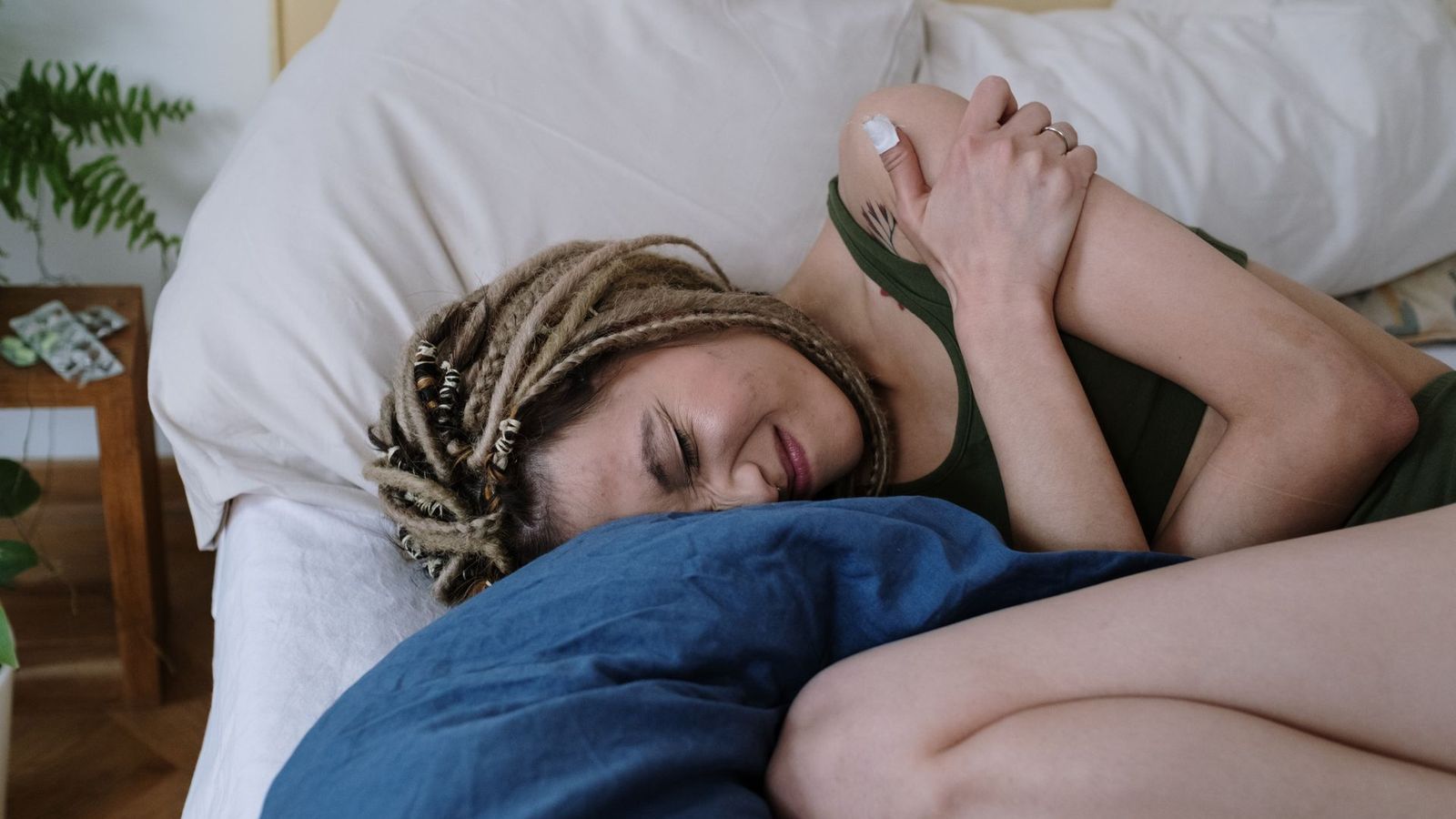
Not a list of remedies you have already tried. The details that change how fast relief actually arrives, the small things making it worse that you have never been told about, and how to get through the rest of the day.
Quick answer: take an anti-inflammatory in the fastest-absorbing form you have, with a small amount of food rather than a big one, then use the twenty to forty minutes before it works properly on the things that act immediately: continuous heat, emptying your bladder and bowels, unbracing your abdomen, and slow breathing out. Then set an alarm for your next dose, because the first day of a heavy period tends to hurt in waves, and the one that arrives after your first dose wears off is the one that catches people out.
Why you woke up in it
Two honest answers, and which one applies to you matters for next cycle but not for the next hour.
Sometimes it genuinely is a timing thing. Anti-inflammatories are generally recommended starting at the first sign of bleeding or the first twinge of pain, rather than once the pain is fully established, and that is the standard advice in clinical guidance. If you knew your period was due, had nothing, and woke up like this, that is part of the story. It is also the single most fixable thing in this whole article, so it is worth knowing rather than being protected from.
But plenty of people wake up in exactly this state having done nothing wrong at all. Prostaglandins, the inflammatory chemicals that make your uterus contract, build overnight while you are asleep and in no position to act on anything. Periods turn up early. A cycle lands heavier than the last three for no reason you can identify. And for anyone with endometriosis, adenomyosis or fibroids, dosing early helps but does not reliably prevent this kind of morning. If you have been diligent and are still here, the answer is not that you were not diligent enough.
Either way, the thing that actually shortens this morning is speed, and self-blame is not one of the interventions.
There is a second reason mornings can be disproportionately rough regardless of what you took. Broken and shortened sleep measurably lowers pain tolerance, which is one of the better-replicated findings in pain research. So if cramps have been surfacing you through the night, the pain you wake up to is landing on a nervous system that is already more sensitive than it was yesterday. The same intensity of cramp genuinely hurts more at 6am on four hours of fragmented sleep. That is physiology, not you being dramatic.
The practical consequence is that everything below is organised around getting relief started faster, rather than around finding a remedy you have not heard of.
Making the painkiller work faster
Most advice stops at "take ibuprofen." The form, the timing and what you take it with all change how quickly it gets into you, and this morning that difference is worth having.
Form matters more than people realise. Solubilised or liquid-gel capsules are absorbed faster than standard compressed tablets, because the drug is already dissolved and does not have to break down in your stomach first. Pharmacokinetic studies put the difference at roughly fifteen to thirty minutes earlier to peak blood levels. Chewable and effervescent forms behave similarly. If you keep a stash by your bed, this is the version worth stocking. Standard tablets absolutely still work, they just take longer to start, and this morning that is the whole game.
Take it with a small amount of food, not a meal. The usual advice is to take anti-inflammatories with food to be kinder to your stomach, which is reasonable. But a large or fatty meal slows how quickly the drug empties out of your stomach into your small intestine, where it is actually absorbed, and that delays the point at which you feel anything. A few bites of toast, a couple of crackers, or a small yoghurt is the sweet spot. Full breakfast first, then the tablet, is the slowest option.
Pick the one that matches your day. Ibuprofen starts working in roughly twenty to thirty minutes and lasts four to six hours. Naproxen takes longer to arrive, around thirty to sixty minutes, but covers eight to twelve. If your morning contains a lecture, a shift or an exam where you will not realistically be able to redose, naproxen is the better call even though it is slower off the mark. Paracetamol, sold as acetaminophen or Tylenol, does not act on prostaglandins, and reviews of period pain specifically find it less effective than anti-inflammatories, so for cramps it is a fallback rather than a first choice. We go through the full comparison of the three on the relief and options page.
Ibuprofen (Advil, Nurofen) | Naproxen (Aleve) | Paracetamol (Tylenol) | |
|---|---|---|---|
Anti-inflammatory? | Yes | Yes | No |
Lowers prostaglandins? | Yes | Yes | No |
How fast | About 20 to 30 minutes | About 30 to 60 minutes | About 30 to 45 minutes |
How long per dose | 4 to 6 hours | 8 to 12 hours | 4 to 6 hours |
Best for | Fast relief you can adjust | A day you cannot redose on | People who cannot take anti-inflammatories |
Think twice about the codeine combinations. Over-the-counter (OTC) painkillers with codeine in them are a common reach when the pain is bad, and they are a poor fit here. The codeine does not act on the prostaglandin process at all, it is constipating at exactly the point in your cycle when your gut is already unhappy, and it makes you drowsy on a day you are trying to function. An adequate dose of a plain anti-inflammatory does more for cramps.
Caffeine is not the enemy here. This one runs against the usual period advice. Caffeine is a recognised analgesic adjuvant, meaning it modestly increases how well painkillers work, which is why some combination products contain it. The effect is real but small, so a normal cup of coffee or tea alongside your tablet is reasonable rather than transformative. The caveat is that a lot of coffee on an empty stomach, with an anti-inflammatory on top, when you are already nauseous, will make you feel worse. Small amount, with the food, not instead of it.
If you vomited, you probably did not absorb it. Nausea and vomiting are common on a bad first day. If you bring up a tablet within about half an hour of taking it, you have not had a dose. Do not spend the next four hours wondering why nothing is working.
Check with a pharmacist if these are becoming your monthly default. Asthma, a history of stomach ulcers or reflux, kidney problems, or other regular medication all change the calculation. This is a short, free conversation and it is worth having once rather than wondering every month.
The twenty minute gap, used properly
There is a window between taking something and it working where most people lie still and wait it out. These are the things that act immediately.
Continuous heat, and steady rather than scalding. Heat is not the soft option. In trials of period pain, continuous low-level heat applied to the abdomen performed about as well as ibuprofen, and the two together did better than either alone. The mechanism is worth knowing because it tells you how to use it: heat relaxes uterine muscle, and it also activates heat receptors in the skin whose signals compete with pain signals on the way to your brain. That competition only works while the heat is on, which is why an adhesive patch holding a steady warmth for hours does more than a hot water bottle that is too hot for ten minutes and then cold.
Two placement notes almost nobody mentions. First, try your lower back as well as your front. Cramp pain is commonly felt in the lower back, because the uterus and that patch of skin share nerve territory, and some people get noticeably more relief from the back placement and have simply never tried it. Second, if you have two patches, using both is not overkill.

Empty your bladder and your bowels. This sounds too basic to matter and it is one of the most reliably underrated things on this list. A full bladder or a loaded rectum both add pressure inside a pelvis where the uterus is already contracting hard. This one is mechanism and clinical experience rather than trial evidence, but going to the loo, even when you do not especially feel the need to, takes a real amount of pressure off, and it costs you nothing to find out. Plenty of people notice cramp intensity drop afterwards and assume it was coincidence.
Change position, then change it again. Curling on your side with knees to chest and child’s pose both take load off the abdominal wall. So does lying on your front with a pillow under your hips, which some people find works better because it applies counter-pressure, the same principle as pressing your hand into a cramp. There is no single correct position, and the useful instruction is to keep trying them rather than committing to the first one and staying there.
Drink something warm. Modest effect, but you have gone eight hours without fluid. Ginger tea does double duty: ginger has reasonable trial evidence for reducing period pain, though the studies used capsules at doses of roughly 750 to 2000mg a day across the first few days of bleeding, which is far more than a tea bag delivers. Drink it for the warmth and because it helps with nausea, and take the capsules if you want the dose the trials actually tested. There is more on ginger, magnesium and the rest of the supplement evidence in our guide to over-the-counter relief and supplements.
The bracing problem
This is the one that changes things for people and almost never gets said.
When something hurts in your abdomen, you brace against it. Abdominal muscles tighten, breathing goes shallow and high in the chest, shoulders come up, and you hold still because moving seems worse. It is completely involuntary. The problem is that a tensed abdominal wall over a contracting uterus adds a second layer of muscular tension to the thing already hurting, and shallow, rapid breathing keeps your nervous system in the state where pain signals are amplified rather than damped.
Two things interrupt it.
Lengthen your exhale. Breathe in for a count of four, out for a count of six or eight. Longer out than in. Slow breathing with a prolonged exhale shifts you towards the calmer, rest-and-digest side of your nervous system, and slow-breathing practices have modest but consistent evidence for reducing pain and distress. It is one of the few things you can do that starts working within a minute or two and costs nothing. Put a hand on your lower abdomen and try to make it rise on the inhale rather than your chest. If your hand is not moving, you are chest breathing and bracing.
Move a little, rather than not at all. Lying rigidly still encourages muscle guarding. You do not need a workout. Walking to the kitchen, rocking your hips slowly, a few minutes of gentle stretching through hips and lower back. Most people find getting up is worse for about ninety seconds and then better, which is exactly why so few people get past the first ninety seconds.
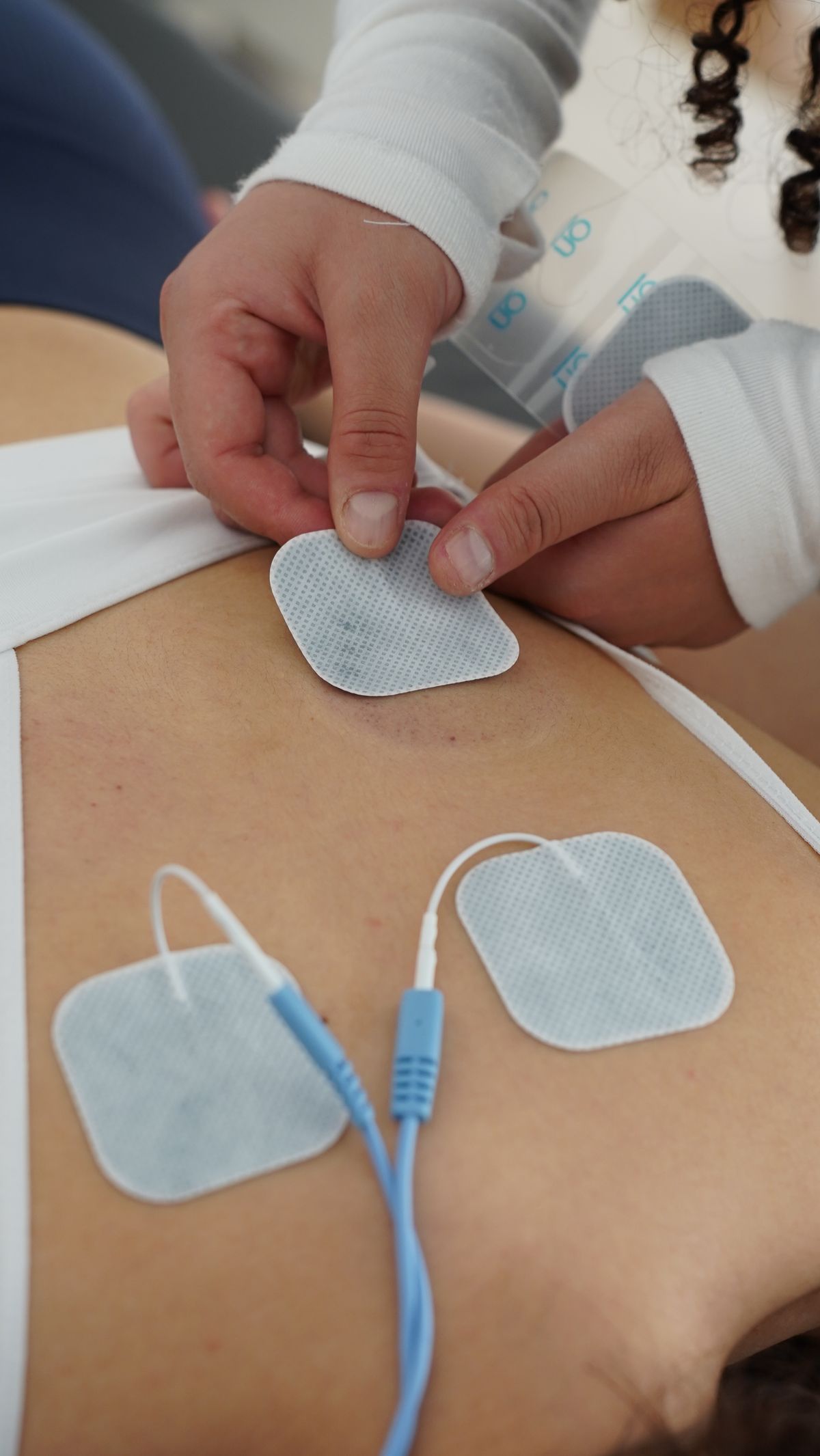
If you own a TENS unit, this is the moment for it. TENS works through the same signal-competition principle as heat, and high-frequency TENS has decent evidence for period pain specifically. Most people feel something within fifteen or twenty minutes, and because the mechanism is different from a painkiller it stacks rather than overlaps. The same lower-back placement point applies: the pads do not have to go on your front.
The second wave
Period pain on a heavy day is not usually a single peak you get through and then it is over. It tends to come in waves across the first day or two, and the wave that arrives four or five hours in is the one people are least ready for, because by then the first dose has worn off.
The mistake is not the first hour, it is hour five. You feel better, you get on with your day, the tablet wears off without announcing itself, and you are back to catching up on pain that has re-established itself. Pain that is already established takes more to bring down than pain caught early, which is the whole reason the timing advice exists.
So set an alarm for your next dose the moment you take the first one, and on a heavy first day take it on schedule rather than waiting to see whether you need it. Staying ahead of it is less work than riding the pain until it comes back. This is also the practical argument for naproxen on a day you cannot reliably redose, and for keeping a heat patch on under your clothes rather than leaving it at home once the morning has improved.
If you want a plan built around what has and has not worked for you specifically, our personalised pain and relief plan walks through it and gives you something concrete to follow next cycle. If you would rather just ask, Sarah, the Periodwise assistant, can talk it through with you.
Things that work, just not this morning
Plenty of period pain advice is perfectly good and completely useless at 6am, because it operates on a timescale of months. It is worth separating the two so you are not lying in bed feeling like you should be doing something with turmeric.
Months, not mornings. Magnesium and omega-3 have some supportive evidence for reducing cramp severity, though the trials are mostly small and the quality is mixed. They work by shifting your baseline over cycles rather than treating an episode. The same goes for regular exercise across the month, which has reasonable evidence behind it, and for dietary changes. Start them, just do not expect anything from them today.
A conversation, not a tablet. Combined hormonal contraception and hormonal IUDs both reduce cramping substantially for a lot of people, often by making periods much lighter or stopping them altogether. Hormonal treatment for period pain is a legitimate use in its own right, not only a contraceptive side benefit, and it is a reasonable thing to raise with a provider if mornings like this are a monthly event.
Actually works now. Heat, TENS, position, breathing, emptying your bladder, and the anti-inflammatory itself. That is a short list and it is the whole list.
If you have to leave the house
Sometimes the day is not negotiable. A few things that make it survivable and that mostly do not appear in the standard advice.
Loosen your waistband. A tight waistband over a bloated, cramping abdomen adds direct pressure to the thing that hurts. This is a real and underrated contributor to a bad day, and the fix is choosing the looser trousers rather than the ones you would normally wear.
Wear the heat patch under your clothes. Against skin, under the waistband, invisible under a jumper, warm for most of a school or work day. This is the single most useful thing you can take with you.
Put the next dose in a pocket, not a bag. Bags get left at desks and in lockers. Pockets do not.
Sit forward, not back. Slumping back into a chair compresses your abdomen. Sitting with feet flat and leaning forward onto your elbows on a desk takes load off the abdominal wall and is socially invisible in a lecture theatre.
Take a two minute bathroom reset. Feet flat on the floor, hands on your lower abdomen, four long exhales. It is the bracing fix, and it works in a cubicle.
Eat something every few hours. Going a long stretch without food on top of cramps produces the specific shaky, nauseous, awful version of a period day, and if you are bleeding heavily you have less margin than usual.
You do not have to explain. "I’m unwell and need to step out" is a complete sentence. You are not obliged to name the reason to a teacher, a manager or anyone else, and needing to say it does not make it a smaller problem.
And it is worth saying plainly: pain severe enough to keep you home is not something you have to justify or push through to prove. It is also clinical information. Missing school, work or sport because of period pain is one of the specific things providers use to separate ordinary cramps from something that needs investigating, so write the day down rather than just getting through it.
The clammy, shaky, need the loo version
Some people get a distinct cluster: cramps plus nausea, diarrhoea, feeling cold and shaky, going pale, sometimes close to fainting. It has a cause and it is not just "bad cramps."
Prostaglandins do not stay in your uterus. They act on smooth muscle throughout your gut, which is where the diarrhoea and nausea come from, and severe pelvic pain can trigger a vasovagal response that drops your heart rate and blood pressure and produces the clammy, tunnel-vision, about-to-faint feeling.
If that is happening: lie down, get your legs higher than your heart, cool air on your face, sip something. Do not try to push through it standing, and if you are on a bus or a train, get off and sit down with your head low rather than waiting for your stop. It usually passes within a few minutes once you are horizontal.
Feeling faint is common. Actually fainting is not something to file under normal period stuff, and it is worth a conversation with a provider.
Tonight, so tomorrow starts better
Day two is frequently as heavy as day one, sometimes heavier, and a lot of how tomorrow morning goes comes down to whether tonight is another broken night.
Dose before bed, not when the pain wakes you. If you are going to take something at 2am anyway, taking it at 11pm is strictly better. Naproxen is the obvious pick here because eight to twelve hours covers most of a night.
Heat overnight, carefully. An adhesive patch is the safer overnight option. Electric pads and hot water bottles are worth being cautious about when you are going to fall asleep on them: low-temperature contact burns from prolonged heat are a documented and genuinely under-appreciated injury, and a numb, curled-up abdomen is exactly the situation where you do not notice in time.
Put the kit by your bed. Tablets, water, patches, something small to eat. The friction of having to get up and hunt for things is a real reason people wait an hour before taking anything, and removing it costs you thirty seconds tonight.
Set the alarm for the morning dose. If tomorrow is likely to be another one, taking something when you wake, before the pain fully establishes, changes the whole day. This is the early-dosing point, and it is much easier to act on for day two than it ever is for day one.
If fatigue rather than pain is the thing that flattens you across a period, that is a different mechanism with different fixes, and we go through it in our post on period fatigue.
When to stop managing it and get seen
Most period pain is primary dysmenorrhoea, meaning it comes from the prostaglandin process itself rather than an underlying condition. It is genuinely common and it responds to the approach above.
Today, not next week, if:
- A full dose of an anti-inflammatory plus continuous heat has made no difference at all
- You are soaking a pad or tampon every hour for several hours running
- You have a fever, or unusual discharge with a strong smell
- You fainted
- The pain is sharp and clearly on one side, especially with a late, missed or unusually light period, or if there is any chance you could be pregnant. Sudden severe one-sided pelvic pain with dizziness, or pain at the tip of your shoulder, needs urgent care rather than an appointment
Worth booking about, if it is a pattern:
- Pain that regularly keeps you from school, work or sport
- Pain getting noticeably worse year on year
- Pain outside your period, including around ovulation
- Pain during or after sex, or with bowel movements during your period
- Pain that has never responded well to anti-inflammatories
- Bleeding that soaks through protection in under two hours, or lasts beyond seven days
That second cluster is the pattern associated with endometriosis, adenomyosis and fibroids. Diagnosis is late for an enormous number of people, and a large part of the reason is that severe pain gets treated as ordinary, first by everyone around you and eventually by you. You do not have to exhaust every home remedy to earn the appointment.
Go in with two or three cycles logged: dates, pain out of ten, what you took, whether it worked, days you missed. It is much harder to wave away than a description from memory. We cover how to prepare for that appointment, and what to do if you are not taken seriously the first time, on our when to seek care page. If getting to a clinic is the bottleneck, telehealth services such as PlushCare are enough for an initial conversation about pain management and next steps.
And if heavy bleeding is part of your picture, low iron stores are a frequent hidden reason that period days feel far worse than the cramps alone explain. Ferritin is the protein that stores your iron, and it falls long before a standard blood count flags anything, so it has to be asked for by name. Your provider is the right route, especially since you want the bleeding looked at too, but if you are in the US you can also order the test yourself.
Frequently asked questions
These are the questions Periodwise readers ask most about getting through a bad cramp morning.
How long before I decide the painkiller has not worked?
Give ibuprofen a full thirty to forty-five minutes, and naproxen up to an hour, with heat on the whole time. If there is genuinely no change after that, mention it to a provider. Period pain that does not respond to anti-inflammatories at all is one of the recognised reasons to look further.
Should I take more than the packet says if it is really bad?
No. Anti-inflammatories have a ceiling: past a certain dose you get no additional pain relief, and you do get additional stomach irritation and risk. If a normal dose is not working, the answer is a different plan rather than a bigger one.
Can I take ibuprofen and paracetamol together?
They act through different mechanisms and are sometimes combined, but the timing and dosing depend on you and on anything else you take. Ask a pharmacist, which is free and takes a couple of minutes. What you should not do is combine two anti-inflammatories, such as ibuprofen and naproxen.
Do anti-inflammatories interfere with hormonal birth control?
No. Standard over-the-counter (OTC) use of ibuprofen or naproxen does not reduce the effectiveness of the pill, the patch, the ring, the implant or an IUD. This is a persistent myth and it puts people off taking pain relief they are entitled to.
Why is it so much worse some months than others?
Cycle-to-cycle variation is normal, and how heavy the flow is, along with sleep, stress and illness, all feed into it. One bad month is not a signal. A trend of worsening months is.
Does the heat need to be hot?
No, and hotter is not better. Steady, comfortable and continuous beats brief and scalding, and low-temperature contact burns from overheated pads on a numb, curled-up abdomen are more common than you would think. Warm and constant for hours is the target.
Is it bad to need painkillers every single period?
Using an anti-inflammatory at the labelled dose for a day or two each cycle is normal, intended use, and not something to ration out of guilt. The things worth raising with a provider are needing steadily more for the same effect, or the labelled dose no longer working at all.
What if I cannot keep tablets down?
If nausea and vomiting are a regular feature of your first day, say so at your next appointment. There are ways around it, and there is no version of this where the answer is that you simply do not get pain relief.
Is a heat patch really as good as ibuprofen?
In trials comparing them for period pain, continuous low-level heat came out roughly comparable to ibuprofen, and the combination did better than either on its own. So the honest answer is that it is not a lesser substitute, it is the other half of the plan.
Know someone who should read this?
Most of us learn this from a friend, not a doctor.