

Tampon Absorbency: Sizing, Timing, and Toxic Shock
Light, regular, super, super plus, ultra. Those words are legally defined in grams, and picking the wrong one is the single biggest thing you control when it comes to tampon safety. Here is how to size yours, how long you can actually leave it in, and what the toxic shock numbers really look like, from Periodwise.

The words on the box are not marketing. They are legally defined amounts of fluid, which means you can compare brands directly and work out your own size in about one cycle. Here is how, plus the eight-hour rule, and the actual toxic shock numbers rather than the frightening version you half remember from a school assembly.
Quick answer: tampon absorbency labels are standardised in grams of fluid, so "regular" means the same thing in every brand. Use the lowest absorbency that gets you through about four hours, change it every four to eight hours, and never leave one in longer than eight. Toxic shock syndrome is genuinely rare, at roughly 1.4 cases per 100,000 people a year in the 13 to 24 age group, but it is serious, and using a tampon more absorbent than your flow needs is the main risk factor you actually have control over.
What the words on the box actually mean
This is the part almost nobody is told: tampon absorbency terms are legally defined rather than chosen by brands.
In the US, the Food and Drug Administration requires standardised absorbency labelling, so a tampon carrying a given term absorbs a specific range of fluid and you can compare one brand and style against another. Absorbency is measured with a laboratory method called the syngyna test, which is essentially a controlled squirt of fluid into a tampon held inside a rubber sleeve. Not glamorous, but it is why the numbers stay consistent from box to box.
Here is the full ladder.
Label | Absorbs | Best for |
|---|---|---|
Light | Up to 6 g | The trailing end of your period, or a very light spotting day |
Regular | 6 to 9 g | Ordinary flow days, and the sensible starting point if you are new to tampons |
Super | 9 to 12 g | Your heaviest one or two days |
Super plus | 12 to 15 g | Genuinely heavy flow, usually day one or two |
Ultra | 15 to 18 g | Very heavy flow only, and worth a conversation with a provider if you need it regularly |
The "ultra" term for the 15 to 18 gram range was added in a rule that took effect in 2001, and the old "junior" label became "light" because "junior" wrongly implied a size for younger people rather than a size for lighter flow. That distinction matters more than it sounds. Your absorbency is set by your flow, not by your age, your body size, or whether you have had sex.
For scale, a whole period is typically somewhere around 30 to 80 ml of fluid across all of its days, and most of that arrives in the first two. So a single super tampon holding up to 12 g is doing a meaningful share of a heavy day’s work.
How to find your size in one cycle
You do not need to guess at this. There is a simple test, and it works within a single period.
The four-hour test. Put a tampon in, and check it around the four-hour mark.
- Soaked through, or leaking before four hours? Go up one absorbency.
- Still largely white, and uncomfortable or draggy to remove? Go down one absorbency.
- Saturated but not leaking, and it slides out easily? That is your size for that day.
A correctly sized tampon comes out easily. If removal is uncomfortable, catches, or feels dry, that is the clearest signal you are one step too absorbent. Discomfort on the way out is information, not something to put up with.
If you are starting from zero, start at regular. It sits in the middle of the range, which makes it the easiest place to calibrate from in either direction.
Why you will probably need two or three sizes
Here is where most people go wrong, and it is completely understandable, because buying one box is simpler than buying three.
Your flow is not one number. It is heavy at the start and light at the end, and often noticeably different from cycle to cycle. If you buy a single box of super and use it for all five days, you are wearing a tampon far more absorbent than you need for the back half of your period, every single period. That is exactly the pattern that raises risk, and it is invisible, because nothing about it feels wrong at the time.
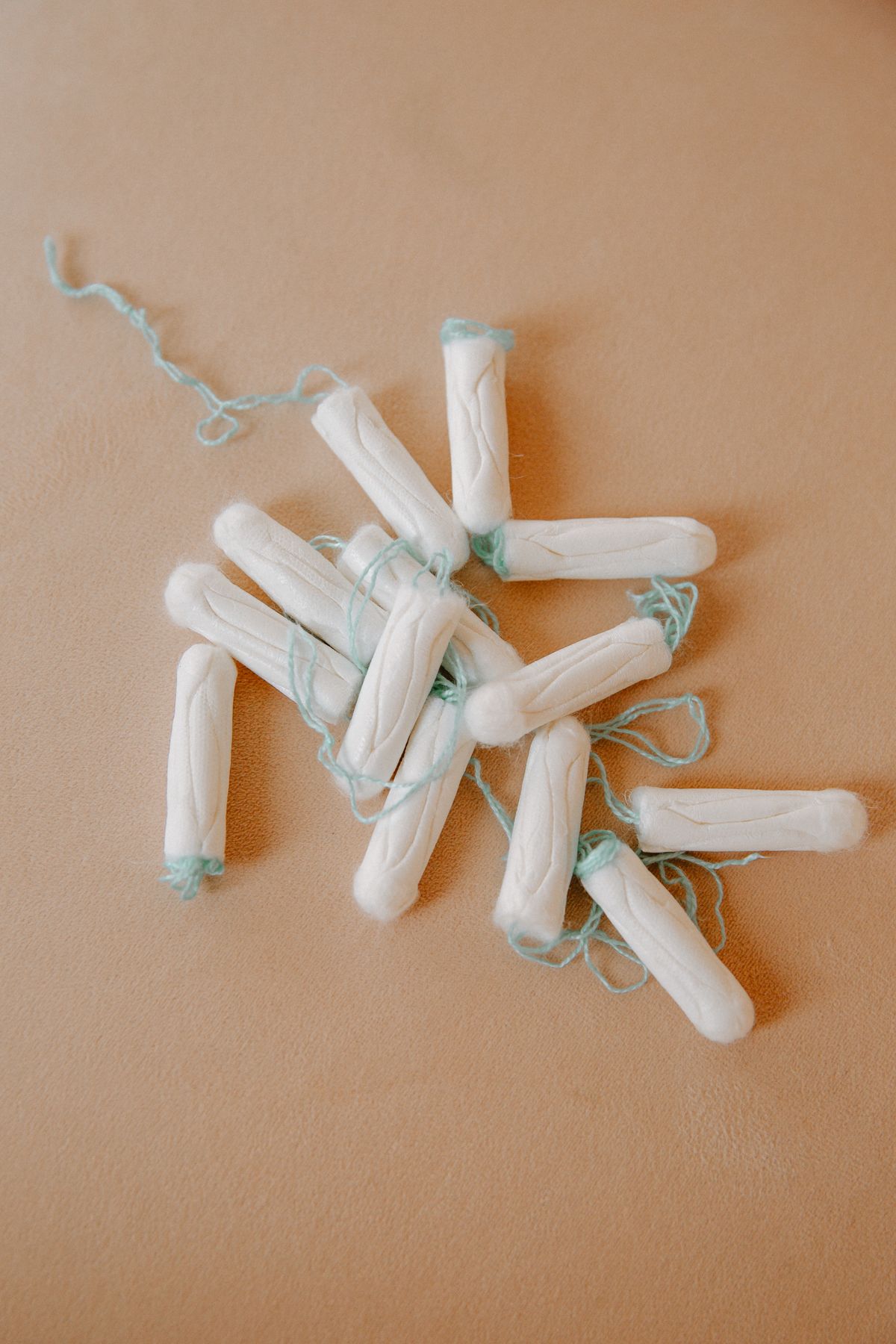
The fix is unfashionably boring: buy a multipack, or buy two boxes, and step down as your period goes on. A typical shape looks like super on days one and two, regular on days three and four, and light or a liner at the end. Mixed-absorbency multipacks exist precisely for this, and they are usually the cheapest way to do it.
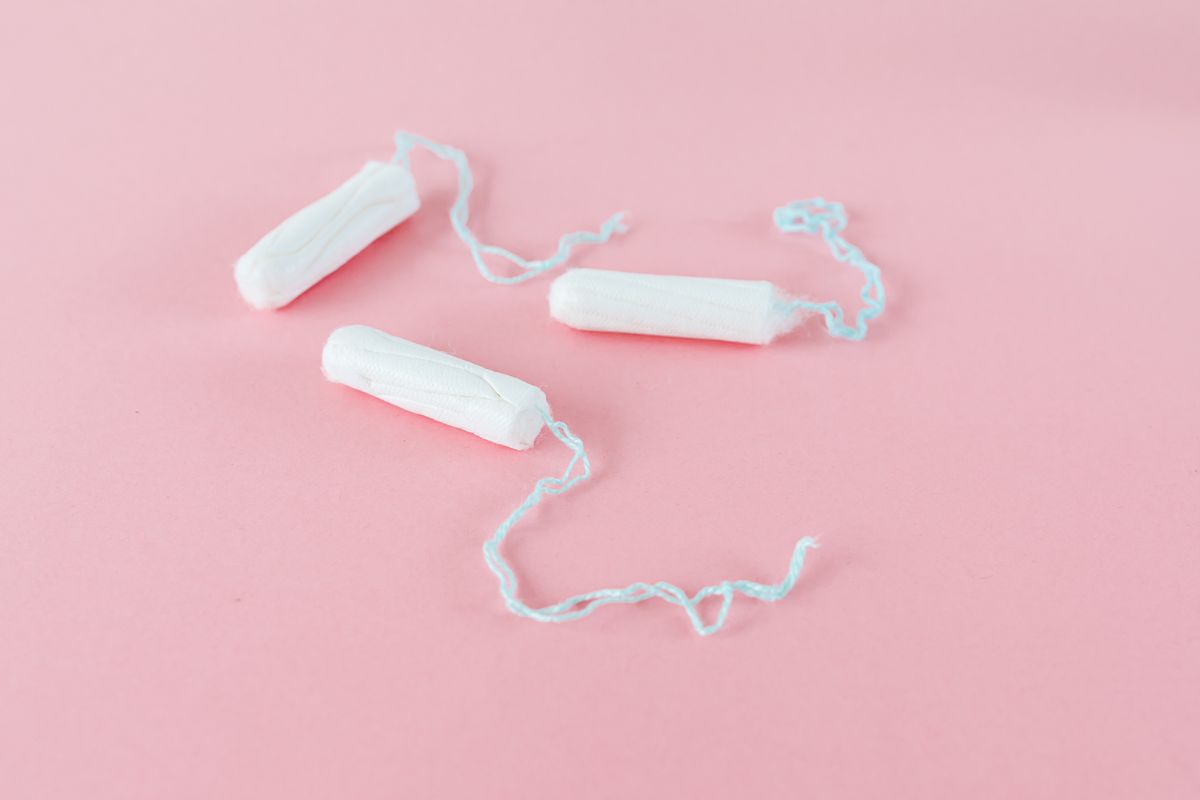
If you prefer organic cotton, the absorbency labels still mean the same regulated thing, so you can size across materials without recalibrating from scratch. Cotton against rayon blends is a comfort and preference question rather than an absorbency one.
How long you can leave one in
Four to eight hours, and never more than eight.
Four hours is the usual lower bound, because if you are getting through them faster than that, either your absorbency is too low or your flow is heavy enough to be worth looking into. Eight hours is the firm ceiling, and it is a ceiling rather than a target. Public health guidance is consistent on this point: not leaving a tampon in longer than eight hours reduces your risk of toxic shock syndrome, and depending on your flow you may well need to change sooner than that anyway to avoid leaks.
One more rule gets skipped constantly: only one internal product at a time. No doubling up two tampons, and no tampon plus a cup or a disc. If you want extra security, pair a tampon with an external product instead, such as a pad, a liner, or period underwear.
Overnight, swimming, and long days
Overnight. A tampon is fine overnight if your sleep fits inside eight hours from insertion to removal. Put a fresh one in immediately before bed and take it out as soon as you wake up. If you regularly sleep nine or ten hours, or you are the kind of person who sleeps through three alarms, do not gamble on it. Period underwear, an overnight pad, or a menstrual cup, which is designed for longer wear, all handle a long night better.
Swimming. Tampons work in water, and they are one of the few options that do, which we go through properly in our guide to the best period products for swimming. Change immediately after you get out, because a tampon partly saturated with pool water is no longer doing its job and you have lost track of the clock on it. Any tampon works in water, so there is no such thing as a special swimming one. What sport versions do differently is use interlocking fibres that expand in every direction, which helps them hold their shape when wet.

Long days. Exams, flights, shifts, and long travel days are where the eight-hour rule tends to get broken without anyone noticing. If you know you will not have reliable bathroom access, a cup or period underwear is the more forgiving choice. Set an alarm if you need one. That is not overkill, it is just planning.
Toxic shock: the real numbers
Toxic shock syndrome, usually shortened to TSS, is the reason all of the guidance above exists, and it occupies a strange place in period education. It is either dramatised into a horror story or waved away entirely. Neither is much use, so here are the actual figures.
TSS is caused by toxins produced by certain strains of bacteria, most often Staphylococcus aureus, usually shortened to staph, which lives harmlessly on the skin and in the bodies of a large share of the population. In rare circumstances, those strains produce a toxin that triggers a whole-body immune overreaction. A second, less common form is caused by a different bacterium, streptococcus, the same family behind strep throat, and that version is not the one linked to tampons.
How rare, in numbers:
- A long-running tracking study in Minnesota found an average of 0.69 period-related TSS cases a year per 100,000 people, with the highest rate in women aged 13 to 24 at 1.41 per 100,000. That highest-risk figure works out to roughly one case per 71,000 people in that age band, per year.
- Broader clinical estimates put period-related TSS at around 0.5 to 1.0 per 100,000, and a recent review describes an overall rate of roughly 0.5 per 100,000, with period-related cases about twice as common as the rest.
- Rates fell sharply in the 1980s. After certain super-absorbent tampon materials were pulled from the market, period-related cases dropped steeply by the middle of that decade. For comparison, one early-1980s tracking period counted 12.3 cases per 100,000 women aged 12 to 49, which then fell to 4.8 per 100,000 over the following nine months.
- Around half of TSS cases today are not related to menstruation at all, arising instead from wounds, burns, and infections after surgery.
So: rare, far rarer than it was, and no longer primarily a period issue. The reason it still gets talked about is the other half of the picture. Of the cases caused by staph bacteria, which is the form tampons are linked to, roughly 8 in 100 are fatal, and the illness can escalate over hours rather than days. A low-probability, fast-moving, serious illness is exactly the kind worth knowing the signs of, even though you will almost certainly never encounter it.
Why absorbency is the part that matters
The reason absorbency keeps coming up, rather than tampons in general, is mechanical.
The vagina is normally a low-oxygen environment. A tampon introduces air along with the fibres, and the staph toxin behind period-related TSS needs oxygen to be produced in quantity. A tampon more absorbent than your flow requires stays partly dry, sits for longer, and holds more air against the vaginal wall. It can also cause tiny abrasions on the way out when it drags rather than slides.
That is the whole reason the guidance is phrased as using the lowest absorbency that works for your flow, rather than as using small tampons. A super tampon on a genuinely heavy day is the correct choice. The same super tampon on day four is the problem. The FDA’s own position is that the lowest effective absorbency should be chosen to reduce TSS risk, and the risk rises with more absorbent tampons, with tampon use across more days of the cycle, and with leaving a single tampon in place longer.
Three variables, and all three are yours to set.
Warning signs, and what to do
TSS symptoms come on suddenly and together. It is not a gradual off day. Watch for:
- A sudden high fever
- Vomiting or diarrhoea
- A rash that looks like sunburn, often on the palms and soles
- Dizziness, fainting, or feeling like you might pass out
- Severe muscle aches
- Confusion, or feeling strangely unwell in a way that is hard to put into words
If several of these turn up while you are wearing a tampon: take it out immediately and seek emergency care. Not a next-day appointment. Emergency care. And say the words out loud when you get there, that you have been using tampons and you are worried about toxic shock. That single sentence changes what gets checked, and how fast.
Do not wait to see whether it passes. Early treatment is the thing that most changes the outcome.
If you have had TSS before, tampons are generally not recommended for you afterwards, because recurrence is a documented pattern. That is a conversation to have with a provider rather than a decision to make from a blog post, and our when to seek care page walks through how to raise it.
Things that do not lower your risk
Organic cotton is not a TSS prevention strategy. It may suit you better for sensitivity, environmental, or preference reasons, and those are all legitimate. But absorbency and wear time are the risk variables, and organic cotton tampons come in the same regulated absorbency range as everything else. Buy them because you like them, not because you think they make the eight-hour rule optional.
Scented tampons do not help. They do nothing useful for odour and can cause irritation. The FDA specifically recommends a warning about allergic reactions and irritation on scented and scented-deodorised tampons. Skip them.
Being on your lightest day does not stop the clock. The eight-hour ceiling applies regardless of how much is actually on the tampon. Arguably it matters more on light days, because a barely-used tampon is the easiest kind to forget about entirely.
Checking the expiry date is worth doing. Tampons do have a shelf life, and storing a box in a steamy bathroom for years is not ideal. Keep them somewhere dry.
When to talk to a provider
Some of what looks like a tampon-sizing problem is actually a flow problem. Book a conversation if:
- You are soaking through a super plus or ultra tampon in under two hours
- You need to double up with a pad to get through the day
- You are getting through a full box in a single period
- You are exhausted, breathless on stairs, or unusually pale alongside a heavy flow
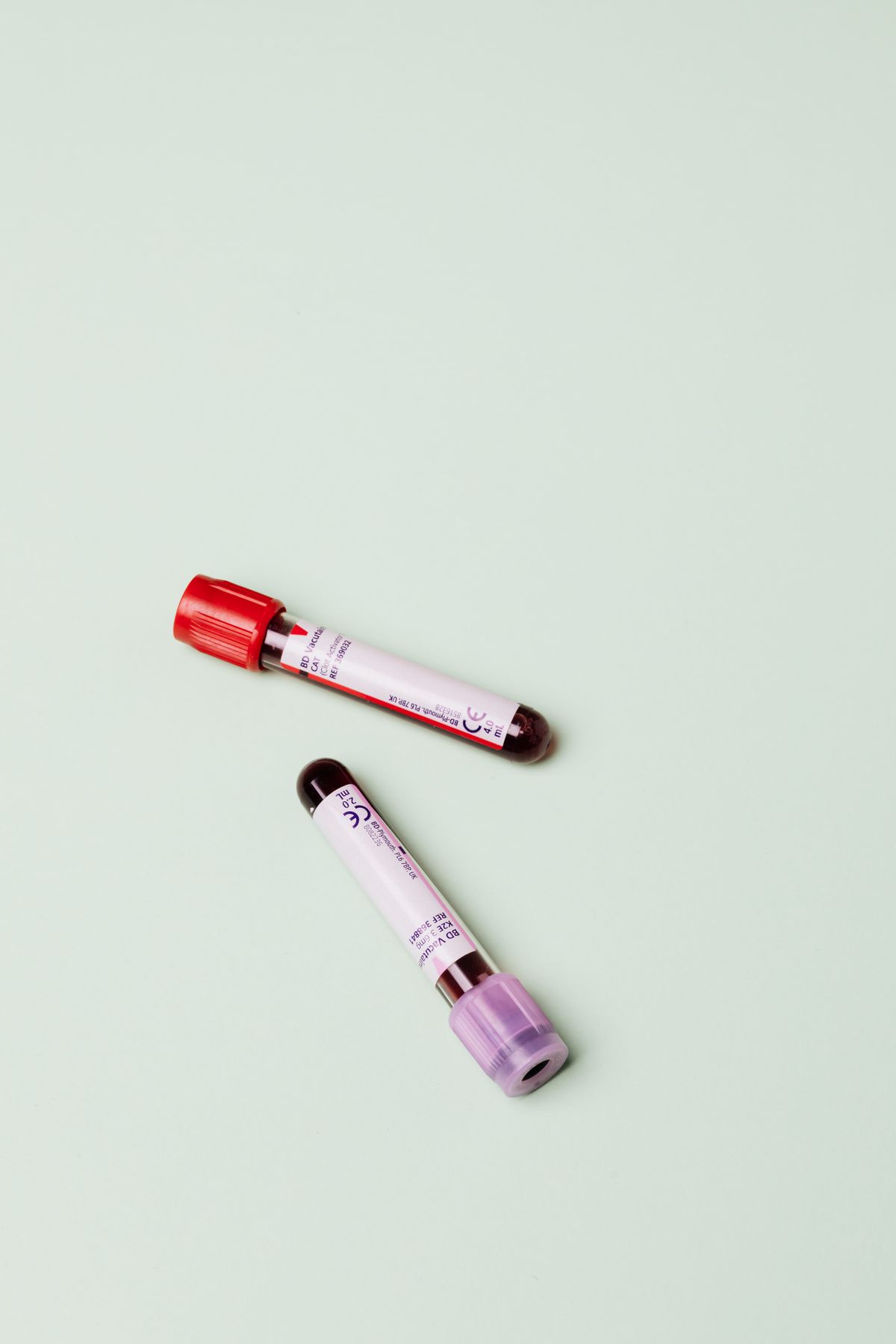
That last cluster is the iron one. Heavy periods are among the most common causes of iron deficiency in people under 25, and it is routinely missed, because a standard blood count can look completely normal while your ferritin, the stored form of iron, is on the floor. We go into it properly in our post on period fatigue. Your provider is the right route, especially since you want the bleeding looked at too, but if you are in the US you can also order the test yourself.
Also worth raising with a provider: if tampons hurt to insert every time, if you cannot get one in at all, or if you have pain that does not match what everyone around you describes. Those are real things with real explanations, and none of them mean you are doing it wrong. If you want to think it through before you book, Sarah, the Periodwise assistant, is a reasonable place to start.
Frequently asked questions
These are the questions Periodwise readers ask most about tampon absorbency.
Can I sleep with a tampon in?
Yes, if your total sleep is under eight hours and you insert it right before bed and remove it on waking. If you sleep longer than that, use period underwear, an overnight pad, or a cup instead.
Does a bigger tampon mean fewer leaks?
Not reliably. Most leaks are positioning or wear-time issues rather than absorbency ones. A tampon that has not been inserted far enough past the vaginal opening will feel uncomfortable and leak around the edges whatever size it is. Going up an absorbency you do not need trades a small leak risk for a larger safety one.
Does "regular" mean the same thing in every brand?
Yes, within the US. The absorbency ratings on the box are standardised, so you can compare across brands consistently. A regular holds 6 to 9 g whether the box was the cheapest on the shelf or the most expensive.
Can virgins use tampons?
Yes. Most people can use tampons or cups regardless of whether they have had sex. If insertion feels difficult, start with a light or regular size, try a different position such as squatting or one foot up on the edge of the bath, and give yourself an unhurried first attempt.
What if I cannot find the string, or think I left one in?
Wash your hands, get into a squatting position, and reach in with clean fingers. A tampon cannot travel anywhere beyond the vagina, so it is retrievable. If you cannot get it out, or if you notice a strong unusual odour or discharge, see a provider promptly. Nobody there will be remotely surprised.
Are cups and discs safer?
TSS has been reported with cups, but reports are even rarer than with tampons, and cups are designed for up to twelve hours of wear, which suits long days and longer nights. Different trade-offs rather than a straight upgrade.
How many tampons a day is normal?
Roughly three to six across a full day is typical, weighted towards the early days. Consistently more than that at a high absorbency is worth mentioning to a provider, and our guide to the best period products for a heavy flow covers what to layer in the meantime.
Know someone who should read this?
Most of us learn this from a friend, not a doctor.